Showing posts with label Indian politics. Show all posts

2017-12-14

Why the BJP is going to lose in Gujarat


Narendra Modi waving at a rally in Gujarat Assembly Elections 2017


The elections are finally over and the exit polls are also out. The people and politicians are now waiting for the election results in Gujarat and Himachal Pradesh, to be announced on 18 December.
Himachal is expecting a clear win for the Narendra Modi-led Bhartiya Janata Party. Being a supporter of the BJP, thinking that it will lose in its strongest fort is a big thing. But there are reasons why I hold this view.

So, what is a loss for the BJP? Anything less than a big majority or getting less than the previous 115 will be counted as a loss by the opposition and will be shown as a dip in popularity of Shri Narendra Modi. Of course, if it loses the elections, it will be a huge setback to BJP and Amit Shah, who is confident of getting 150+ seats in the 182 seat Legislative Assembly.


The reasons, why I believe that BJP is losing the elections-


  •    No Narendra Modi in the state: The first and the biggest reason that BJP is losing its ground in the state is that PM Narendra Modi is not in the state anymore. Without him, the government does not appeal to the wide range of voters who used to see him as a father figure. It has left the Gujarat BJP unit faceless and there appears no leader to lead the people.
    However, even the Congress does not have any face in Gujarat which led to a battle of RaGa and NaMo in Gujarat.
  • The Campaigning: The whole BJP election campaign was filled with personal attacks and emotional speeches by the Prime Minister. Wherever he went for campaigning other than Gujarat, he talked about the centre’s policies and schemes and how they benefitted the country. But in Gujarat, he never talked about them. He launched personal attacks on Rahul Gandhi and gave emotional speeches on how he is being targeted. It never felt like that a Prime Minister is campaigning. He worked as a state leader desperate to win.
    On the other hand, Rahul Gandhi’s campaign only focussed on the policies of the government, asking questions to Narendra Modi and never attacking personally on any BJP leader.
    History tells us that whenever a leader was targeted personally, the people have voted for him. Be it the 2012 Gujarat elections or the 2014 National elections when Narendra Modi was targeted personally by the Congress and he won both of them. In Delhi elections, Mr. Kejriwal was attacked and everyone knows what happened in the elections. 
    It looks that the Congress has learned from this and has changed its policy of NaMo-centric to policy-centric election campaigning.
  • Anti-Incumbency: The BJP has ruled the state for 22 years and it has contributed to a great anti-incumbency followed by no Narendra Modi in the state. A large number of young voters have never seen the Congress in power are voting to give them a chance. This is the reason that young leaders like Jignesh and Hardik Patel have gained a huge following


The Congress had changed its election campaigning drastically as compared to other states. It is clear that if it does not win these elections, its morale will dip to a new low and it will be clear that there is no threat to the Narendra Modi and Amit Shah- led BJP for years to come.

However, if the BJP loses, it will be a huge setback for them, and the party will be forced to analyse what they did wrong and maybe then they will realize that their arrogance has probably reached too far.


2017-07-27

The Big BIHARI Drama

26th July is the date which will be remembered in Indian History not just as Kargil Vijay Diwas but also for the big political drama which took place in Bihar where in just a few hours, Chief Minister Of Bihar became Chief Minister for the 6th time. Sounds tricky?  Let me explain.

Bihar saw very entertaining political drama on 26th July where CM Nitish Kumar resigned from the ministry just because his reputation was at stake as the deputy Chief Minister Tejaswi Yadav, son of former Railway Minister Lalu Prasad Yadav was involved in many cases such as money laundering, illegal property etc. But it is really very hard to digest that the man of clean image Nitish Kumar resigned just because his Deputy CM was having so many charges because RJD head Lalu Prasad Yadav was already found guilty in the GREAT FODDER SCAM and is even not allowed to contest elections and all these charges are from decades. So if he was so much concerned about his reputation he would not had joined hand with such leaders.

Lutyens Blue 26 Litre Polyester School Bag(Lutyens_309)

It looks like a proper scripted daily soap as it took few hours to get converted from RJD-JDU-INC to NDA-JDU. And Governor of Bihar getting admitted to the hospital at last minute added icing to the cake.
The comments of politicians were like Sone par Suhaga for the drama lovers.
Rahul Gandhi, President of INC (the wisest man of India) said that he knew that this will happen 3-4 months back and did nothing to save the so called "Mahagathbandhan".


Akhilesh Yadav Former CM of Uttar Pradesh used song lyrics to describe all the drama

Our Dearest PM Modi ji congratulated CM Nitish Kumar for taking such a bold move and for joining fight against corruption.
In RJD chief Lalu Yadav's words, "Tejasvi to bahana tha, Nitish Ko BJP-RSS ki god mei jaana tha."

With this move now BJP And its alliance are governing 67% of Indian Population and the oldest and biggest party of India, the INC is governing just 6% of population.
Let's hope for the best for the people of Bihar and let's hope CM Nitish and new Deputy CM Sushil Modi will work with best of their credability and will make future of Bihar bright.

2017-07-16

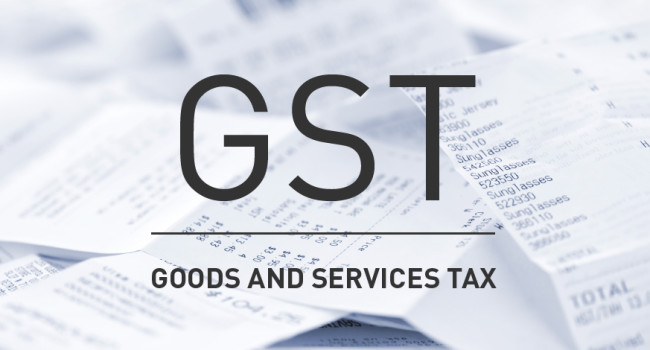
Goods And Services Tax: A revolutionary change in Indian Taxation structure


Goods and service tax aims to streamline the taxation structure in the country and replace a gamut of indirect taxes with a singular GST to simplify the taxation procedure.It is one of the biggest economic and taxation reform undertaken in India.Taxes like excise duty,VAT,service tax,luxury tax will go with GST’s implementation.It avoids the cascading effect which increases the tax burden on end consumer

The old tax structure was divided into two-Direct & Indirect taxes.Direct taxes are the levies that cannot be passed on to someone else ex: Income tax. 

In case of indirect tax the liability of the tax can be passed on to someone else ex: when a shopkeeper pay VAT on his sale he can pass the liability onto the customer and in effect the customer has a higher outlay when he buys an item. GST has a system of input tax credit which will allow sellers to claim the tax already paid so the final liability on the end consumer is decreased.

IN GST, there are three kind of taxes :-
  • CGST - where the revenue will be collected by central government
  • SGST- where the revenue will be collected by the state government of intra-state sales
  • IGST- where the revenue will be collected by the central government for inter state sale.


    For example:


A dealer in maharashtra sold goods to a consumer in maharashtra worth Rs 10,000. The GST rate is 18% comprising CGST rate of 9% and SGST rate of 9%.In such cases the dealer collects 1800 and 900 will go to central government and 900 to maharashtra government but if the consumer is from gujarat then in such has to pay Rs 1800 as IGST.This IGST will go to central government and there no need to pay CGST and SGST.


How will GST help a common man?


Say a shirt manufacturer pays Rs 100 to buy raw materials.If the rate of taxes is set at 10% then he has to pay Rs 10 as tax and the wholesaler buys it at Rs 110 and add labels to it which increases the cost by Rs 40 and the cost of shirt becomes 150 and by adding 10% tax on it he sells the shirt to retailer at the price of Rs 165.when the retailer packs the shirt he adds value if Rs 30 to it and adding 10% tax on it the total price of shirt becomes Rs 214.5 which the customer has to pay. This is known as cascading effect in which the taxes add up.
Now,with the introduction of GST when the wholesaler buys from on the manufacturer he pays 10% tax on his cost price because the liability has been passed on to him and after adding value of Rs 40 the tax he has to pay is Rs 14 but because he had already paid Rs 10 with the cost price he just has to pay Rs 3 as tax to the government and sells it to the retailer at the cost price of Rs 154 (140+14). Retailer adds value of Rs 30 to it and has to pay Rs 17 as tax but as he already paid Rs 14 he just has to pay Rs 10 to the government as tax and he sold it to the customer at the price of Rs 184 (154+30+3).
Thus the shirt for which the customer had to pay 214.5 earlier now will be available at Rs 184 making it cheaper for everyone.


History of GST in India


  • 2000- PM Vajpayee sets up committee to draft GST and set up tech & logistic for GST
  • 2007-Empowered committee of state finance minister forms joint working group
  • 2008- EC finalizes dual GST structure to have separate levy and legislation
  • 2012- parliamentary standing committee begins discussion on GST but stalled it over clause 278B
  • 2013-standing committee presents it's report on GST
  • 2014- GST bill reintroduced in parliament with necessary reforms
  • 2015- Passed in lok sabha. Petroleum to be excluded from GST
  • 2015- GST bill does not pass in rajya sabha
  • 2016- amendment model GST law passed in both houses,president gives assent
  • 2017-Rajya sabha passes four supplementary GST bills.Final GST implemented from 1st july 2017.
The idea behind having one consolidated indirect tax is to subsume multiple indirect taxes is to help country's business gain a level of playing field and to put us on par with foreign nations who have more structured tax system.However, According to some economists GST will impact negatively on real estate market it would add up to 8% to the cost of new homes and reduce demand by 12%.Some experts even say that CGST,SGST are nothing but new names for VAT and excise duty and hence there is on major reduction in the number of tax layer.The aviation industry would be affected as service tax on airfares currently range from 6-8% and with GST it will surpass 15% and effectively double the rate.


2017-07-15

Number of holidays taken by Indian Prime Ministers


narendra modi, bjp, prime minister of India, india
You all must know that our honourable Prime Minister Narendra Modi has not taken a single leave since he took charge in 2014. He works for 14-16 hours in a day and sleeps for only about 4 hours. BJP President Mr. Amit Shah and other senior leaders always talk about this fact in their rallies.
But have you ever wondered how many leaves did other Prime Ministers of our country take?
What about Dr. ManMohan Singh who was the Prime Minister for 10 years? Or Jawaharlal Nehru? Or Shri Atal Bihari Vajpayee?

Let us first talk about Dr. Manmohan Singh. 

manmohan singh, congress, india, former prime minister of India

He was the PM of India from 22nd May 2004 to 15th May 2014. 
You will be shocked to know how many leaves he took.


Any guesses?

Zero.         0              Null


Yes. Dr. Manmohan Singh did not take a single holiday when he was in office.


But what about Pt Jawaharlal Nehru?

The total number of leaves he took while in office is zero. This is the same for other Prime Ministers as well.

Actually, there is no provision of a holiday for the Prime Minister of India. So, whether he is attending a meeting,


Or having a rally


narendra modi, rally, india, bjp


Or is on a foreign tour

narendra modi, barack obama, shinzo abe, india, bjp, prime minister

Or doing yoga

narendra modi, india gate, yoga, international yoga day

He is always on national duty.

Then why all the fuss? Jumla?


If you have a second to spare, would you like to know why such real news does not reach you?

2017-07-10

Congress National Party or National Traitor?

Indian National Congress is the oldest party we have in our country which used to have great leaders like Indira Gandhi, Rajiv Gandhi (excluding Jawaharlal Nehru deliberately). The happy picnic time of INC had ended with the dawn of Narendra Modi led Bhartiya Janta Party. Congress does not even deserve to be called as the main opposition party. The rising power and popularity of BJP are adding fuel to fire for INC. Ruling for almost 60 years INC leaders thought that India couldn't run without INC. The baseless talks and idiotic and some anti-national actions of the party leaders clearly show how much frightened they are from Narendra Modi led BJP.
Some anti-national actions like meetings held by senior party leader Mani Shankar Iyer with Kashmir seperatists after Central Government clearly declaring that no talks will be held along with terrorism. But It looks like it is hard for the congress leaders to come out of the reigning period they feel as if they are superior and they will do whatever they want to do.


In the high tension at Indo-China-Bhutan tri junction and Chinese media constantly attacking India and giving warnings of wars the strong and bold decision taken by Modi Government to not to withdraw troops from the border is highly respected and shows how much confidence India have on its army and is not afraid of anyone. Instead Of respecting and appreciating this decision, INC's so called President without informing or asking central government went to meet Chinese ambassador to talk on the same. This gives bad impression and shows how politically weak India is.
It feels like INC has decided to oppose and find flaws in each and every decision that the Modi government takes. Boycotting the GST launch by INC was the perfect example of same and the reason of boycott i.e. the central hall midnight launch used by BJP which was used previously by Jawaharlal Nehru and Indra Gandhi. And according to INC, GST launch was not that big thing for which Central Hall should be used for a midnight launch. The whole world saw GST as a revolutionary move by Indian Govt in tax reform but according to the INC, the GST is useless.
Politics on the basis of caste, class and religion is coming to an end which is not at all digestable by opposition and they are ready to get down to any level to stop Modi govt.

God please shower some blessing on our so called politicians to let our country grow.

2017-06-24

Treatment of stone pelters in different countries

Yet again, we have people throwing stones on Indian army personnel. Reply? Government is planning to change pellet guns with ‘milder’ options.

Ever wondered how are the stone pelters in other countries treated? Well, you could only wish you had never done that before!

Israel:

If you do something like throwing stones on an armyman in Israel, they will identify you and then kill you. It doesn’t stop here. They might reach your home, ask your family members to respectfully vacate the house and fill it with concrete.
that is how Israeli's treat stone pelters


USA:

Don’t throw stones at a US Marine on duty, your whole family will curse you, if you live, of course.
You might be killed on spot, and your family, till three generations will be added to the no-fly list.

Russia:

Did not like the treatment in USA? You will surely like all this in Russian style. If you do something heinous, you might end up at the ‘Black Dolphin’ and you’ll love it! Mind my words, it is one of the most brutal jails on planet Earth. You’ll be living in a cell inside a cell in another cell. You’ll never ever be able to see mother nature again and will be under constant surveillance.
Read more about Black Dolphin.


China:

In case you plan to pelt a stone at a guard in the Tiananmen Square - hope you take your family into confidence, since it is they who would be suffering the most, while you are made to wait in a 4ftx4ftx4ft cell in one of the Chinese Organ Harvesting facilities, awaiting a patient that matches your blood type.
Your government will not just make a profit by selling your organs - they’ll also make your family pay for the operation and the subsequent funeral - after they freeze the bank accounts of your family members of course.


India:

We are the most different nation, ahimsa our main motto. We celebrate stone pelting, hold debates whether they are right or wrong. We advise the army to stop using pellet guns and switch to milder ‘chilly powedered’ pava shells.


A mob like this can surely be handled by chilly powder shells, right?


Hope we reach somewhere in this debate. Human rights are for security forces too.


2017-05-25

Why can't India afford a war?


Most of us want our country to give Pakistan a clear answer. We don't want proxy wars, we want them to know our power. And how is that possible — a war.
    Or maybe not. Because wars are not so good.


These are the main things we might face due to a war—


Economic crisis- We are the world's fastest growing economy. The fast growing GDP had a minor halt due to the recent demonetization and we do not want our country's economic progress to stop completely, right? 

A war will cause great loss to infrastructure and lives. We will be spending large amounts on defense equipments and on rebuilding the infrastructure that was devastated due to war. This might cause a big standstill on our country's economic growth.

Danger of losing something else, or a world war- A war never goes unnoticed. If the war continues for a long time, we risk a world war.


China might not help Pakistan directly but seeing India on a warfront, China might attack Arunanchal Pradesh, to get the territory they call 'Aksai Chin'. With warfronts on two sides, India might find it difficult to cope up with this.

Life of countrymen- Who wants our countrymen, specially our soldiers to die? We do not want a huge loss of life, of both civilians and army men. With a war going on it is inevitable losing lives. Nobody in this country, except those who live for Pakistan, would want our brave soldiers to die in large numbers.

A war is never good. It always loss- of lives, of culture, of relations, of biodiversity and of economy. Every country on this planet would try to avoid a war and tries to resolve any conflict by negotiations. Even we did not get our independence by fighting.

2015-03-26

LAND ACQUISITION BILL 2015

    LAND ACQUISITION BILL 2015:  Pros, cons and political opposition


The government has decided to introduce an ordinance to make major changes in the existing Land Acquisition, Rehabilitation and Resettlement Act 2013. It is in many ways aimed to be a course correction after the Act passed by UPA was deemed as restrictive by industry bodies. But it has also increased apprehension that the poorest of the poor, who often cultivate lands but are not the owner, may be left high and dry with no compensation. Government’s ordinance has attracted major criticism from the opposition and Anna Hazare is currently holding a protest in Jantar Mantar against it.

Here are the pros and cons of the new Land Acquisition Bill-

Removal of consent clause and Social Impact Assessment

In the previous law, 80% consent of the landowners for private works and 70% for PPP (Public Private Partnership) was required which has been removed for 5 sectors. These are- national security, defense, rural infrastructure including electrification, industrial corridors and housing for the poor including PPP where ownership of land continues to be owned by  the government. This even applies for fertile land.

Pros or Advantages- It will promote development, faster development of rural infrastructure and generation of employment. According to the government, the consent clause is very dangerous to National Security. Just think of what the development of the 5 sectors mentioned above (national security, defence, rural infrastructure including electrification, industrial corridors and housing for the poor including PPP) can do the for the farmers and the poor.

Cons or Disadvantages- It will start a new cycle of acquisition of land without any consent or the approval of the landowners. Even the fertile land could be taken resulting in the non-production of any crop on the land.

Compensation and rehabilitation

The compensation given to the farmers remains the same as was in the previous act- 2 to 4 times of the price of the land, which is to be given by the state government. Also, the land would not be taken away before providing a land for the rehabilitation of the farmers.
Pros or Advantages- It is a pro-farmer act, as said by the government and this proves it.
Cons or Disadvantages- The only disadvantage is that we live in India where the process is very slow and cumbersome. It will take years to provide compensation and rehabilitation to the farmers.

OPPOSITION OF THE ACT


Congress has strongly opposed the ordinance saying anybody who is pro-farmer should raise their voice against it. But according to an Indian Express report, Haryana and Kerala wanted to remove the consent clause for PPP or bring it up to 50%. States like Assam, Haryana and Himachal Pradesh felt that the definition of affected family is too broad.
On social impact assessment, Karnataka, Kerala, Maharashtra and Manipur all demanded that the process be restricted to only large projects.
Other opposition parties like JD(U), Left and AAP have strongly expressed their reservation about the ordinance. So it will be an uphill task for government to pass it in Rajya Sabha where the government is in minority without Congress's help.


What are your views on this Land Acquisition Act? Is it pro development or against farmers? Comment your views


(Source of information: DNA’s website, written by CentreStage. I thank DNA for the information and we hope we do not require 70% consent for this! :D :P)

Follow us-
Twitter
Facebook

2015-03-25

IPC Section 66A IT Act

IPC Section 66A: Just demolished by the Supreme Court

Source: Takshashila Institute


The Supreme Court of India has just declared that the IT Act, formally known as the IPC Section 66A, is constitutionally invalid. According to the court, IPC Section 66A is a threat to the Fundamental Right of ‘Right to Freedom of speech,’ guaranteed by the constitution of India to all the citizens of India.

Do you know about this law? If not, read the article below:


What is Section 66A of the IT Act?

Section 66A defines the punishment for sending “offensive” messages through a computer or any other communication device like a mobile phone or a tablet. A convict can get a maximum of three years in jail alongwith or without a fine. The convict can be arrested and put up in jail on the command of an Inspector of Police of a police station on the commencement of an FIR.

What is the problem with that?

The problem of the Section 66A of the IT Act is the vagueness about what is “offensive”. The word has a very wide connotation and allows distinctive and varied interpretations. It is subjective, and what may be ‘okay’ for one person, may lead to a complaint from someone else and, consequently, an arrest under Section 66A if the police accept the person’s view.

How did the controversy begin?

The first petition came up in the court following the arrest of two girls in Maharashtra by Thane Police in November 2012 over a Facebook post. The girls had made comments on the shutdown of Mumbai for the funeral of Shiv Sena chief Bal Thackeray. The arrests outraged people over the manner in which the cyber law was used.
A girl named Shreya Singhal had filed the case about the constitutional legality of the law. Now she has won the case and proved that this was not legal, atleast in the views of the Supreme Court judge.

How frequently has 66A been used?

Most cases of arrest were reported in 2012. The professor of the Jadavpur University, Ambikesh Mahapatra was arrested for forwarding caricatures on Trinamool Congress chief Mamata Banerjee on Facebook. Activist Aseem Trivedi was arrested for drawing cartoons mocking the Indian Parliament and the Constitution to depict their ineffectiveness. Air India employee Mayank Sharma and K V Rao from Mumbai were arrested for allegedly posting offensive comments against politicians on their Facebook group.

I think that this was not a serious offense. I say bad about politicians every day, even the Political Science book of class 10 mocks the politicians and political parties! (Yes, I’ve read it).
Businessman Ravi Srinivasan was arrested by Puducherry police for an allegedly posting an offensive tweet against the son of a former cabinet minister.

What are the grounds for the challenge?

While the objective behind the 2008 amendment was to prevent the misuse of information technology, particularly through social media, Section 66A comes with extremely wide parameters, which allow unusual interpretations by law enforcement agencies. Most of the terms used in the section have not been specifically defined under the Act. A lot of part has been left blurred in the law.The petitions have argued that it is a potential tool to suppress legitimate free speech online, and to continue freedom of speech and expression guaranteed under the Constitution, going far beyond the ambit of “reasonable restrictions” on that freedom.

And now, the recent arresting of an 11th class student by the UP police for posting an “offensive” post about the UP cabinet minister Mohd. Azam Khan has again ignited the fuel against the section 66A of the IT act.

(The information has been taken from indianexpress, Wikipedia and from News Channels).

What are your views about the act and Supreme Court judgment about it? Feel free to comment!
If there is a mistake in any of our article’s points, please comment here. We look forward to our readers’ suggestions.


Article 370: Facts and myths

Common Myths About Article 370


Read the article and decide whether to accept or reject article 370

Many of us appreciate or don’t like the article 370 which gives special status to the state of Jammu and Kashmir but we don’t know about it. Read the article about Myths About Article 370 and decide whether to accept or reject that article. (Our article is acceptable!)

DUAL Citizenship? : Not exactly true
The state of Jammu and Kashmir has created a special type of residents who are called Permanent Residents (PRs). They are the ones who can buy or own land in the state of Jammu and Kashmir. So, the PRs are still Indian citizens having Indian passports. In the broader sense, it is certainly not a dual citizenship. However, if we consider it more specifically and technically, it is dual citizenship. Since only some of the citizens of the country, i.e. Jammu and Kashmir citizens, have the PRs, and rest of the country doesn’t, it can be considered to be dual citizenship.

Separate National Flag? : True

Jammu and Kashmir is the only state of the Indian Union which has a separate national flag. They hoist the flag on auspicious occasions along with the Indian national flag. (Source- lawmin.nic.in )

Separate Constitution? : True

The most controversial part of the article 370 is that it gives the right to the state to have a SEPARATE CONSTITUTION. This caused a controversy when late Shyama Prasad Mukherjee formed a political party (Bhartiya Jansangha, now, Bhartiya Janta Party) by resigning from the Jawaharlal Nehru government, started a movement against it and died while in custody of the Jammu and Kashmir police. He gave the slogan “Ek desh me 2 vidhan aur 2 pradhan nahi chalenge” (We cannot have 2 constitutions and 2 heads in a single country). The state of Jammu and Kashmir has to give permission to all the laws passed in the national parliament before they are executed except in defense, foreign affairs, etc.
According to the supporters of the article 370, this gives the state of Jammu and Kashmir the power to develop on its own like Hong Kong (it is a part of China but has its own constitution).
But the ones opposed to the article say that it reduces the powers of the Indian parliament which is the greatest law making authority in India.

MLAs have six-year terms? : True

The state of Jammu and Kashmir has the longest running legislative assembly of 6 years whereas all the legislative bodies in India have a term of 5 years.

Insults to National Symbols are not a crime? : Not true.

The Prevention of Insults to National Honour Act, 1971 is an Act of the Parliament of India which prohibits desecration of or insults to the country's national symbols, including the National Flag, The Constitution, and the National Anthem. "It extends to the WHOLE of India. Another act Emblems and Names (Prevention of Improper Use) Act, 1950, "It extends to the WHOLE of India, and also applies to citizens of India outside India.” Whenever the state of Jammu and Kashmir is exempt from any act, it is specified separately. For example, in case of the Indian Penal code, it extends to "whole of India EXCEPT the State of Jammu and Kashmir". In the state of Jammu and Kashmir, the counterpart of IPC is known as Ranbir Penal Code (RPC).

 SC lacks jurisdiction in J&K? : Not true. 

This is one of the most common myths prevailing in our country about article 360. In 1954 vide Constitution Application Order of 1954, the jurisdiction of the Supreme Court was extended to the State of J&K.

Women of J&K lose PR when married to a non-Kashmiri Indian but don't when married to a Pakistani? : true

 Though the law did not discriminate between female and male PRs, an administrative rule made it clear that women could remain PRs only till marriage. After that, they had to seek a fresh right to remain PRs. And if a woman married someone who wasn’t a Kashmiri PR, she automatically lost her own PR status. In 2004, the state high court declared that there was no provision in the existing law dealing with the status of a female PR who married a non-resident. The provision of women losing their PR status after marrying outside the state, therefore, did not have any legal basis. A People's Democratic Party government, led by Mehbooba Mufti, passed a law to overturn the court judgment by introducing a Bill styled “Permanent Residents (Disqualification) Bill, 2004’. This was not Mufti’s solo effort. Omar Abdullah’s party, the National Conference, backed this Bill and got it passed in the assembly. But it did not ultimately see the light of day for various reasons." The Bill was passed in the Lower House with a voice vote and was headed to become a law with its passage in the Upper House when it attracted controversy, didn’t go through the Upper House. Since then, there has been another attempt to pass the Bill — in 2010 — but in vain. Regardless, the J&K HC’s 2004 order that allows women from J&K to retain their permanent resident status, even after they marry non-state subjects stands.


There is no RTI act in J&K and CAG is not allowed there? : Not true.

 The Jammu & Kashmir Right to Information Act, 2009 came into force on 20 March 2009, repealing and replacing the erstwhile Jammu & Kashmir Right to Information Act, 2004.
The Comptroller and Auditor General (CAG) of India is an authority, established by the Constitution of India under Chapter V, who audits all receipts and expenditure of the Government of India and the STATE GOVERNMENTS. No exception stated here.

 Women in Kashmir come under the purview of Sharia Law? : Not exactly true.

All the Muslims in India have their own law, the Shariya law instructed by the Indian Muslim Personnel Law and so, there is no special case for the state of Jammu and Kashmir.

Panchayats are not recognized in Jammu and Kashmir? : Not true.

There is no 16% reservation for Hindu-Sikh minorities in J&K? : True
the Muslims constitute 67% of the population, the Hindus about 30%, the Buddhists 1%, and the Sikhs 2% of the population of the state. Nobody gets any reservation in the state although there is demand for that.

No land ownership in J&K for non-Kashmiri Indians? : True.

Only the Permanent Residents of Jammu and Kashmir can buy and own land in the state, not allowed for the citizens of the rest of the India.
Citizens of Pakistan can get Indian citizenship by marrying any Kashmiri girl? : Not enough research :
According to my research, I can say that the woman gets the Pakistani citizenship since Indian law does not allow dual citizenship and hence loses the Indian citizenship. So, the Pakistani cannot get the Indian citizenship.


(The information has been taken from Wikipedia, Quora, and many other websites along with those who have been mentioned in the article).

If there is a mistake in any of our article’s points, please comment here. We look forward to our readers’ suggestions.

Follow us-
Twitter: @TheGreatUnltd


Check how stone pelters are treated in different countries. Russians are awesome!